BIM MEP

Uncategorized
Wishlist Share
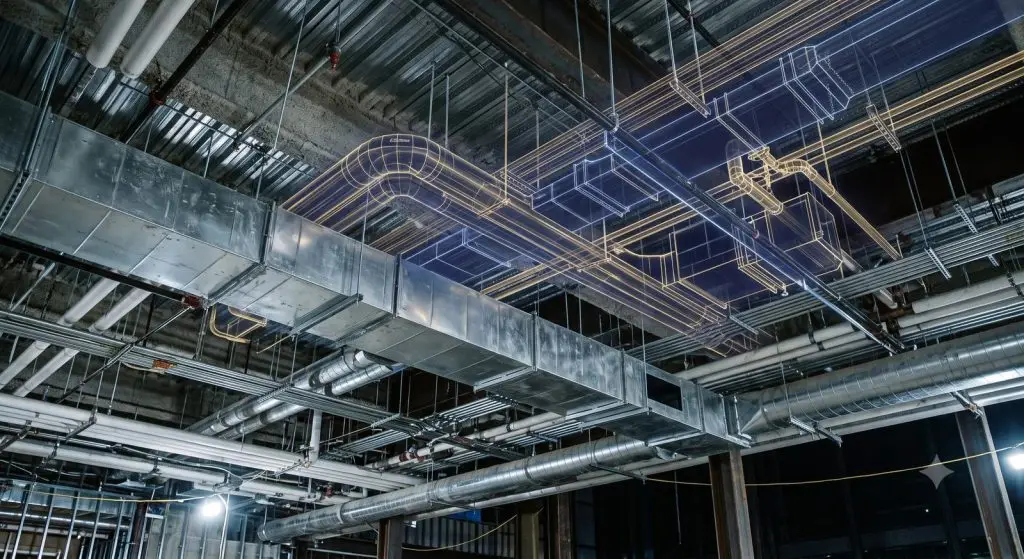
Holographic MEP systems overlay on real ductwork installation

About Course

Model and coordinate HVAC, Plumbing, Fire Fighting, and Electrical systems in one integrated BIM workflow.

What Will You Learn?

  • Create HVAC, Plumbing, Fire Fighting and Electrical models
  • Generate schedules and BOQs
  • Produce construction documentation
  • Coordinate MEP disciplines

Course Content

Introduction to BIM & Revit

  • What is BIM?
  • CAD vs BIM
  • Revit Interface
  • Project Browser & Properties
  • Navigation Tools
  • Project Templates
  • Units & Project Setup

Revit Basics

HVAC

Plumbing

Fire Fighting

Electrical

Families

Documentation

Coordination

Final Project

Common Questions

Frequently Asked Questions

Answers to what people most often ask before enrolling in this course. Don't see your question here? message us on WhatsApp.

What exactly does "MEP" cover in this course?

expand_more

MEP stands for Mechanical, Electrical, and Plumbing — the building services layer that includes HVAC systems, plumbing and drainage, fire-fighting systems, and electrical distribution. This course covers modeling and coordinating all four of these disciplines within one integrated BIM workflow across 10 focused modules and 60 lessons — the systems that, if poorly coordinated, cause the most expensive clashes and rework on real construction sites.

Why is BIM MEP coordination considered so important on real projects?

expand_more

MEP systems are where the majority of on-site coordination clashes actually happen — a duct routed through a structural beam, plumbing that conflicts with electrical conduit, fire-fighting risers that weren't accounted for in the architectural layout. BIM-based clash detection (using tools like Navisworks) catches these conflicts in the model before construction starts, which is significantly cheaper than discovering them on site. This is one of the clearest, most concrete reasons BIM has become standard practice over traditional 2D CAD coordination.

Is MEP a good specialization if I'm coming from a mechanical or electrical engineering background?

expand_more

Yes — MEP BIM modeling is a natural fit for mechanical, electrical, or plumbing engineers moving into digital coordination roles, since it builds directly on the systems knowledge you already have and applies it to BIM software and multidisciplinary coordination workflows rather than teaching engineering fundamentals from scratch.

How does this course teach coordination with architecture and structure, not just MEP in isolation?

expand_more

The course is framed around integrated coordination — meaning MEP systems are modeled and checked against architecture and structural models, the way they actually have to be reconciled on a live project, rather than teaching MEP modeling as a standalone exercise disconnected from the rest of the building. If you want the fuller picture of how all three disciplines fit together, see our comparison of the BIM tracks.

Is this course relevant for international projects, or focused on local Pakistani standards?

expand_more

The coordination workflow and standards taught follow the same BIM compliance approach WAA applies to GCC and UAE municipal submissions — MEP coordination logic (clash detection, systems integration, documentation) is largely consistent internationally, so these skills apply whether you're working locally or remotely for an international firm. The course is delivered fully online.

What software is used for MEP modeling and coordination?

expand_more

The course is built around Revit MEP workflows for modeling, with clash detection and coordination review typically handled through tools like Navisworks — the same combination used in professional multidisciplinary BIM coordination.

Can I take this course without having taken BIM Architecture first?

expand_more

Yes — BIM MEP is a standalone specialization and doesn't require you to have completed the Architecture track first, though understanding how architectural and structural models are structured does make MEP coordination easier to grasp. If you're unsure which track matches your background and goals, this guide can help you decide.

What's the course format and how do I check current batch availability?

expand_more

Fully remote, self-paced within structured modules — check the WAA Skill Studio page for current batch dates, since enrollment opens periodically with limited seats per cohort.

How do I get my specific questions answered before enrolling?

expand_more

Book a consultation or message us on WhatsApp — especially useful if you want to confirm the course matches your specific engineering background before committing.